



In the Sanlitun business district of Beijing, a comprehensive space that integrates clothing, shoes, accessories and lifestyle products is refreshing people's traditional perception of clothing stores. The comfortable relaxation area and immersive scene arrangement make consumption not only about shopping, but also an experience of a lifestyle.
The store staff explained that selling a single piece of clothing is prone to reaching a sales limit. However, offering a variety of product combinations and creating scenarios can not only generate new sales volume but also drive the main selling categories, thereby fostering efficient cross-selling and enhancing the operational efficiency of the store.
From single-category sales to lifestyle integration, from traditional stores to fashionable experience spaces, the concept of integrated business models has quietly become a distinct symbol of the transformation in the clothing industry. Jiao Pei, the full-time vice president of the China Clothing Association, said, "The reason why integrated stores can succeed in the market is that they have accurately grasped the real psychology of consumers. What they need is not a single category of products, but a choice of a lifestyle."
This trend is driving the clothing industry to break away from the traditional model and understand demands from a broader perspective, as well as integrate resources. In line with this trend, the 2026 Guangzhou Greater Bay Area (GZ) International Fashion and Lifestyle Exhibition (Style GZ) will be held in June. It is introduced that the exhibition no longer confines itself to traditional clothing displays. Instead, it innovatively introduces the "four-exhibition linkage" model, and concurrently holds four thematic exhibitions: clothing, eyewear, luggage, shoes and leather goods, and jewelry and wedding dresses. Professional buyers can complete all-category procurement from accessories to clothing in one place, designers can find complete support from conception to implementation, and brand owners can precisely reach the global market.
The transformation goes beyond channels and scenarios; it lies in the profound upgrade of experience and value. The Herland brand is implementing a new offline aesthetic store operation model that integrates shopping, live streaming and experience. The aesthetic store is not only a physical women's clothing store but also a live streaming and product display area for various categories of goods. The store manager, Cui Xitong, said that after customers shop in person, they can enjoy makeup services and take photos in the portrait area of the store. They can complete the photo selection and editing on the spot and finish the process that day, which is convenient for them to post on their social media promptly and meet their needs for experience and social sharing.
Under pressure and moving forward, this is the true portrayal of China's clothing industry. "High costs, unstable markets and other factors have followed one after another. Both manufacturing enterprises and brand enterprises are facing certain difficulties," said Jiao Pei. The Chinese clothing industry has never lacked resilience. This exhibition, with the theme of "The Life of Growth", uses a group of "vine-like" images as the main character, precisely symbolizing that the industry is like a vine, firmly rooted, breaking through obstacles and growing upward towards the sun.
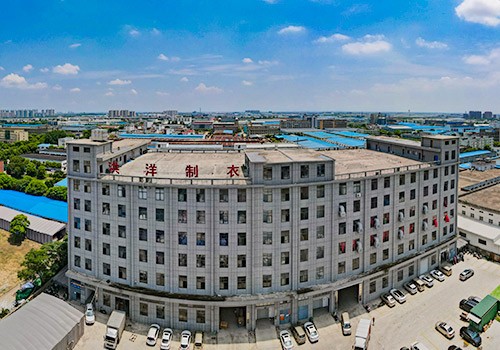
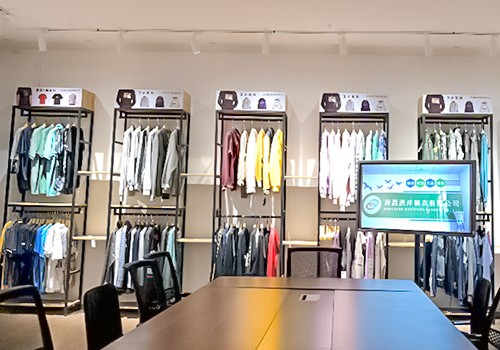
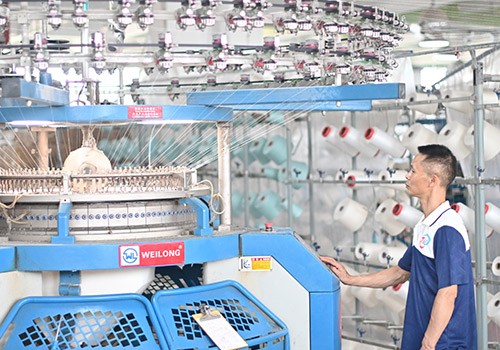
The strength of resilience stems from the continuous strengthening of the industrial foundation and the iterative upgrading of the supply chain. Relying on a complete industrial chain system, China's clothing industry is transforming from traditional manufacturing to "intelligent manufacturing + services". Some specialized markets have upgraded from traditional wholesale stores to shopping and trade spaces with elegant environments and a wide range of categories, with their cost-effectiveness and design capabilities simultaneously improving. This transformation not only shifts the industry from single product display to the integration of all elements such as design, supply chain, and trend release, but also promotes the continuous expansion of the industry's resource base.
Design capability is the core competitiveness in the clothing industry. Jiao Pei believes that although everyone has different understandings of beauty, the commonality of beauty still exists. From the perspective of the entire industry, all parties are working together to assist those enterprises or original studios with excellent design capabilities in better presenting their achievements, helping original designs move from behind the scenes to the forefront.
Industrial ecosystem optimization provides protection for emerging forces. Previously, due to limitations in scale and funds, small and exquisite design brands struggled to break through. Now, with the continuous improvement of the public service platform in the industrial belt, the gradual maturation of flexible supply chains, and the emergence of specialized vertical exhibitions, emerging forces have gained fertile ground for low-cost trial and error and high-efficiency exposure for their growth.
Technological innovation enables industrial upgrading throughout the entire chain from design to marketing. The MuseGate series of products independently developed by Hangzhou Linrun Intelligent Technology Co., Ltd. is a full-chain artificial intelligence solution for the clothing industry. The founder, Qu Yu, stated that without the intervention of artificial intelligence, for a clothing company to launch a new product, from booking models, renting venues to completing the shooting, it would take at least one week to one month. After the shooting, there is also a lot of post-production work. However, with the application of artificial intelligence, the entire process can be completed in just a few minutes, with the same effect as manual production, while the creative output has significantly increased.
"Previously, the average cost of shooting a piece of clothing was around 400 yuan. After using this AI technology, the cost of a single piece has dropped to between 10 yuan and 30 yuan, with both efficiency and scale improving." Qu Yu said. Compared to general AI tools, this set of technology focuses on the core barrier of clothing aesthetics. Specifically, by disassembling multiple dimensions such as people, clothes, scenes, and shooting styles one by one, an exclusive clothing aesthetic basic model is formed, providing technical support for reducing costs and increasing efficiency in the industry.
The trends keep changing, but the pursuit of beauty remains constant. The clothing industry, with resilience as its foundation, promotes innovation and transformation, and strives to tell the fashion story of China.