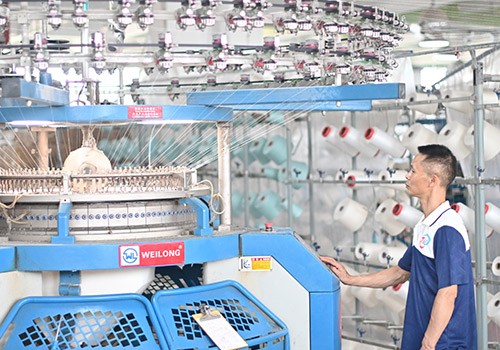

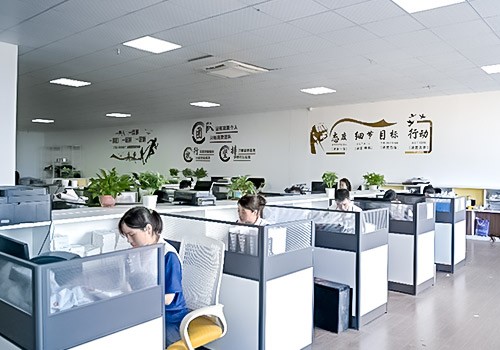



By 2028, more than 300 national standards related to multi-configuration, digital transformation, etc. will be revised and updated.
The textile industry's upgrading now has clear guidelines to follow.
The textile industry is a traditional pillar industry, an important livelihood industry and an international competitive industry in China. Recently, the Ministry of Industry and Information Technology, the Ministry of Ecology and Environment, and the State Administration for Market Regulation jointly issued the "Action Plan for Standard-Driven Optimization and Upgrading of the Textile Industry (2026-2028)" (hereinafter referred to as the "Action Plan"), following the principle of "filling gaps in standards, raising standards when necessary, and emphasizing implementation of high-quality standards", to further optimize the supply structure of standards, enhance the implementation efficiency of standards, improve the internationalization level of standards, accelerate the construction of a standard system that leads the optimization and upgrading of the industry, and promote the high-quality development of the textile industry.
Further improve the textile standard system
The textile industry plays a significant role in stabilizing employment, promoting innovation and expanding consumption. China has the most complete textile industrial system in the world, producing over 70 billion pieces of clothing annually. The export volume of textile and clothing products accounts for more than 30% of the global textile and clothing trade. China's production scale and trade scale rank first in the world. According to data from the China Textile Industry Federation, the retail sales of clothing, shoes, hats and knitwear products of the national limited-upgrade category will reach 1,521.5 billion yuan in 2025, with a year-on-year growth of 3.2%.
What were the considerations behind the introduction of the "Action Plan"? A relevant official from the Ministry of Industry and Information Technology explained that currently, China's consumption upgrade is continuously deepening, and market demands exhibit characteristics of individualization, diversification, and high quality. The current standard system is unable to fully meet the diverse demands. Therefore, it is urgent to implement the "Action Plan" to further improve the textile standard system. By enhancing the quality of standard supply, it is expected to drive the improvement of enterprises' core competitiveness and enhance the adaptability between supply and demand.
According to the introduction, the "Action Plan" takes into account the current pace of standard formulation and revision as well as the existing work foundation. Based on thorough research of the actual industry situation and a review of the existing standard gaps, it sets out the goals for domestic and international standard formulation and revision - by 2028, more than 300 national standards related to diversity adaptation, digital transformation, green and low-carbon, health and safety, etc. will be formulated and revised, significantly enhancing the supply capacity of textile standards; more than 10 international standards will be formulated and revised, with the international standard conversion rate remaining above 85% continuously, and the consistency between domestic and international standards will steadily improve.
In the process of industrial upgrading, standards serve as both the bottom line for quality and safety, as well as the unified benchmark for technical routes, testing methods, product identification, and market access. They can reduce the collaborative costs between the upstream and downstream industries and facilitate the faster conversion of scientific and technological achievements into products and orders. Wu Qi, a senior researcher at Pangu Think Tank, believes that the introduction of the "Action Plan" is equivalent to setting an executable upgrade "roadmap" for the industry.
Standard supply is more precisely and detailedly defined.
The "Action Plan" focuses on the development goal of optimizing the supply level of textile standards, and has deployed 7 key tasks to promote a deeper transformation of the textile standard system. Specifically, the following aspects are mainly proposed.
-- Meeting diverse demands. In the past, the standards in the textile industry mainly focused on bulk products, making it difficult to cover niche markets. The "Action Plan" proposes to promote the revision and formulation of product standards such as those suitable for the elderly and small-sized products, develop new standards for textile fibers, high-value utilization standards for natural fibers like cotton, wool, and silk, and high-tech textile products, and accelerate the research and formulation of standards for intangible cultural heritage of textiles and cultural products of the "national trend". Wu Qi stated that this means that from comfortable clothing for the elderly to trendy clothing for young people, from pet products to functional outdoor textiles, all will have more precise and detailed quality standards.
— Accelerate digital transformation. The Action Plan emphasizes that, based on the needs of R&D design, production manufacturing, application services, and data management, relevant standards for the deep integration of information technologies such as the Internet of Things, artificial intelligence, big data, and cloud computing with the textile industry should be formulated and revised. The digital transformation standard system for the textile industry should be continuously improved. It is worth noting that the Action Plan specifically proposes the development of textile Internet of Things standards for product production management, digital passports, and traceability systems. Wu Qi believes that there are many small and medium-sized enterprises in the textile industry. When promoting digital standards for these enterprises, it is essential to avoid "one-size-fits-all" or "a complete transformation at once". A more practical approach is to break down the standards into hierarchical, scenario-based, and step-by-step "roadmaps". First, solve high-frequency scenarios such as equipment networking, data collection, quality management, energy consumption management, and warehousing and logistics, and then gradually extend to collaborative design and supply chain collaboration. In light of the actual situation of the textile industry, the government should also provide supporting public service platforms, low-cost solutions, and a graded evaluation system for service providers, so that enterprises can first "afford it and understand it", and then achieve deep transformation.
-- Promote green and low-carbon development. The "Action Plan" focuses on low-carbon process technologies and equipment. It leads green manufacturing and the development of green products through standards, and mainly develops rules and standards for carbon footprint accounting of typical textile products and standards for the recycling of used textiles. It also accelerates the formulation of standards for green products such as bio-based, degradable fiber materials and sustainable textiles.
— Maintain the bottom line of health and safety. The "Action Plan" focuses on the health and safety of textile products, promotes the revision of mandatory national standards for basic safety of textile products and for those for infants and children, promptly tracks the progress of banned and restricted harmful substances in domestic and foreign textile products, and develops standards for the limits of harmful substances and their detection.
Accelerate the "standard export" of the textile industry
Standards are the "common language" for industries to go global. Accelerating the "standardization" of the textile industry to go global is conducive to enhancing the comprehensive competitiveness of enterprises. In this regard, the "Action Plan" has also made relevant arrangements.
The "Action Plan" states that it will deepen the integration of standards with international standards. It will closely monitor the updates of international standards, combine with China's national conditions and the actual needs of the industry, conduct timely evaluations and conversions, and enhance the level of integrated domestic and foreign trade. It will focus on the advantageous and characteristic fields of China's textile industry, propose international standard proposals and formulate international standards based on domestic standards, and increase China's contribution rate to international standards. It will mobilize the enthusiasm of domestic technical institutions, social organizations and key enterprises, strengthen multi-level cooperation and exchanges with foreign standardization institutions, and increase China's participation in international standardization activities. Around the "Belt and Road Initiative", it will strengthen the research on standards of countries and regions participating in the "Belt and Road", continuously strengthen the translation of Chinese standards into foreign languages for general test methods and bulk trade products, and smooth the international trade of textiles and clothing.
Wu Qi believes that for the textile industry, the compliance pressure and market impact brought by international standards have become a reality that enterprises must confront. The significance of the "Action Plan" in proposing a series of measures to promote the integration of standards lies in helping enterprises better align with regulations such as labels, traceability, greenness, and safety earlier, reducing compliance conflicts, and enhancing the level of integrated domestic and foreign trade as well as the ability to participate in international rules.
The implementation of the "Action Plan" still requires effective safeguard measures. A relevant official from the Ministry of Industry and Information Technology stated that they will strengthen supporting guarantees from multiple aspects to ensure the smooth implementation of the "Action Plan". In terms of talent support, they will encourage the introduction and cultivation of specialized textile standardization talents with cross-disciplinary background and international vision; in terms of technical support, they will support the establishment of an industry standard consultation service platform, and promote the construction of statistical analysis points and standard implementation monitoring points for mandatory textile standards. (Reporter Kong Dechen)
(Source: People's Daily Overseas Edition)